FAMOUS BEACHES IN GOA
- CALANGUTE : The Enamour of Downtown Calangute" Holding the spectacular beauty and charm with all the frantic nightlife of an ocean paradise, Calangute is your way to heaven. Encircled by palm and coconut trees, the beach is spread four miles along the Arabian Sea and nine miles from the Panaji. Accompanied by Candolim village that wings it towards south and crossroads of Baga towards north, Calangute Beach forges the real attraction of Goa tourism. Here, the charms are multiplex like the exotic jewels hanging from the storefronts, local's warmth, or it could simply be the orphic sea-breezes that bring an imminent adventure. Due to its incredible beauty and serenity, it's known as the 'Queen of Beaches'. It's among the top ten bathing beaches in all over the world, which remains crowded during daytime with tourists & locals

- .BAGA: Baga Beach is a popular beach and tourist destination in North Goa.Baga is located at the north end of the contiguous beach stretch that starts from Sinquerim, Candolim, leads to Calangute, and then to Baga.

Dolphins can be located at around 1–2 km from the shoreline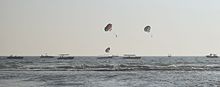
Parasailing in Baga BeachThe beach contains rows of shacks and fishing boats, and at high tide the beach is narrow.The beach is named after the Baga Creek, which empties into the Arabian Sea at the north end of the beach.Baga Beach is also famous for water sports, such as parasailing and banana rides, and dolphin cruises. In Baga Beach, new parking has been constructed for around 800 cars or more, and there is baga creek bridge which connects northern part like Arpora, Anjuna etc.. - ANJUNA :Anjuna ([ɦɔɳzuɳẽ]) is a village located on the coast of North Goa, India. It is a Census Town, one of the twelve Brahmin comunidades of Bardez. It is mostly a tourist destination.
Its church, St. Michael's Church, Anjuna, founded in 1595, is dedicated to S. Miguel, and celebrates the feasts of S. Miguel (29 September) and Nossa Senhora Advogada (second week of January). There are three large chapels in the parish: the one to S. Antonio (Praias), to Nossa Senhora de Saude (Mazalvaddo), and to Nossa Senhora de Piedade (Grande Chinvar). The chapel at Vagator became the church of the new parish of Vagator, dedicated to S. Antonio, in the twentieth century.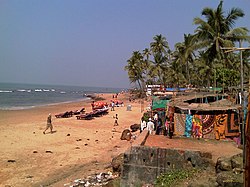
- VAGATOR :Vagator Beach has dramatic red cliffs looking down on the shore and two fresh water springs within a stone's throw of the sea. But Vagator has little by way of seaside accommodation.Vagator Beach is split into two main beaches by a seaside headland which holds the car park and lots of stalls selling trinkets, clothes, soft drinks and snacks. As you face the sea, on your right is North Vagator Beach (Big Vagator) and on your left Ozran Beach, more commonly known as Little Vagator Beach.Vagator is a little more laid back, though still pretty much steeped in the rave culture. The tourist traffic is predominantly Western backpackers, however it has also become popular with Indian tourists, who particularly come to watch the sunset from the rocks. The sunset through rocks is breathtaking from Vagator Beach.

- COLVA :Colvá is a coastal village in Salcete, south Goa, on the west coast of India. Colva Beach stretches for around 2.4 kilometres (1.5 mi), part of a beach consisting of about 25 kilometres (16 mi) of powder white sand, lined along its shore by coconut palms and extending from Bogmalo in the north to Cabo de Rama in the south.Colvá is a famous tourist destination, visited for its beaches, budget hotels, guest houses, beach shacks, food stalls, restaurants, pubs and bars. The beaches are constantly monitored by lifeguards, and the swimming areas are flagged for warnings.The village had significant importance to Portugal and was the retreat for Goa's high society, who would come to Colvá for their "Mundanca" or change of air. Today the Portuguese area is dotted with houses or villas, including many ruins. On weekends, huge crowds of tourists, visitors from around the world as well as local Indians, enjoy the sunset and various activities. The beach is particularly busy in October, when hordes of religious pilgrims come and visit Colvá Church, called Igreja de Nossa Senhora das Merces, that was founded in 1630 by the Roiz family and rebuilt in the eighteenth century on the village square.The local people have been fishermen since the mid-16th century. They include Hindu converts as well as migrants from various Portuguese overseas territories such as Angola, Mozambique, Brazil, etc. as well as Portugal itself.


